Faculty Members/Lecturers
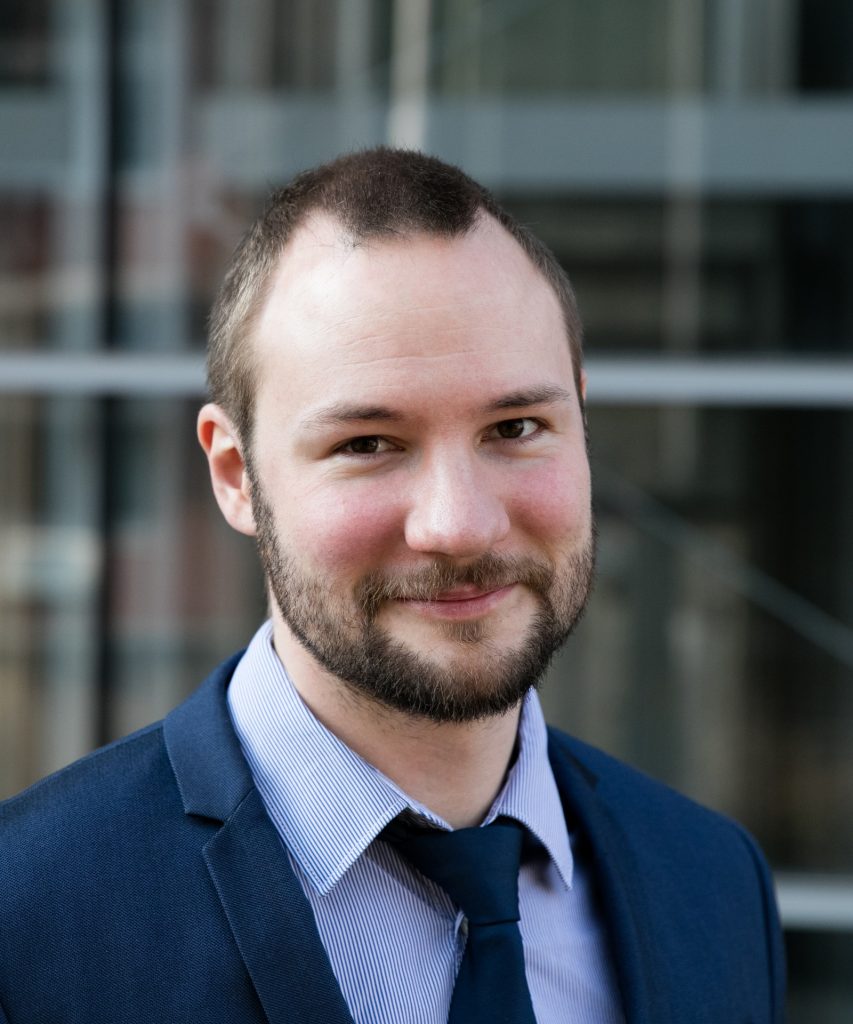 Ondřej is an Associate professor at the Department of Strategy. He is a member and co-founder of the Center for Family Businesses and a member of the Ethical committee for research at the Faculty of Business Administration. His main teaching interests include mathematics, corporate finance, and statistical methods for research. He studied business administration at the Prague University of Economics and Business, computer science and engineering at the Czech Technical University in Prague, and mathematics at the University of West Bohemia, Pilsen.
Ondřej has worked in the field for 8 years. He also cooperated with RWE GasNet (nowadays just GasNet) on a project related to natural gas distribution in the Czech Republic. He is active at the Center for Family Businesses where he is responsible for family business research.
Courses taught within EMO:
Financial Mathematics
Ludmila Mládková works at the Prague University of Economics and Business, Czech Republic. She specialises in management, knowledge management, management of knowledge workers and managerial leadershipand lectures and publishes in these topics. She strongly believes that only systemic approach to management brings benefits to organisations.
Course taught within EMO:
Management
 Aleš is an Associate professor at the Department of Strategy at Prague University of Economics and Business. He is a founding member of the Center for Family Businesses and a member of the Internal grant board at the Faculty of Business Administration. His teaching areas include family business governance, strategy, and research methods. In his research, he primarily focuses on family firms and corporate governance.
Aleš is a member of the Family Firm Institute and holds an Advanced Certificate in Family Business Advising (ACFBA).
Course taught within EMO:

Dr Efthymia Kottika is an Assistant Professor at Prague University of Economics and Business. She specializes in strategic marketing management (market and entrepreneurial orientation of small-medium sized enterprises and market-driving organizations) and global digital marketing phenomena (social media storms and consumer empowerment). Her research has been published in leading peer-reviewed scientific journals such as the Journal of Business Research, Industrial Marketing Management and the International Journal of Tourism Research. Moreover, her work has been included in the proceedings of international peer-reviewed conferences of renowned scientific bodies such as the: American Marketing Association (AMA), Global Marketing SIG, Academy of Management (AOM), European Academy of Management (EURAM) and European Marketing Academy (EMAC), to name a few. She has co-authored the book “Social Media Storms: Empowering Leadership Beyond Crisis Management”, published by Routledge. She has worked as an academic and researcher in three countries (Greece, the United Kingdom and the Czech Republic). She is a Fellow of the Higher Education Academy in the UK. Throughout her career, she has been nominated for and/or awarded several teaching and research awards and scholarships. As a full-time academic, she has worked for over 6 years.
As a principal investigator, she has participated in the project “Excellent Team of FBA: Strategic Business Orientations» as well as in the project “The Impact of COVID-19 in the Automotive Industry”, which is supported by the Internal Grants for Employees (IGA2). As a team member, she has participated in projects supported by the European Union and the Visegrad Fund. She has developed applied market research projects for the automotive industry.
Course taught within EMO:
 A Lean Six Sigma Black Belt, Dr Martínez’s career covers process excellence in Lean Management and Organisational Design. The research in Lean Management explores the creation of a leanness measurement system (Lean Index) and its applicability. He also researches lean in the framework of Industry 4.0. The research in Organisational Design focuses on the Procedures to set up the organisational structure. His PhD presents more than 10 years of work on this topic. He is an Industrial Engineer (Pontificia Universidad Javeriana, Bogotá) and PhD in Management (Prague University of Economics and Business). He has worked in the field for 20 years, earning experience in Colombia, India and the Czech Republic.
Felipe has more than 20 years of experience working for several companies and institutions, having taught in Canada, Portugal and other countries. He constantly cooperates with firms on developing specific projects in process improvement and operations management, even going as far as to employ even virtual reality, for instance.
Courses taught within EMO:
Quality, Environment, Health and Safety Management
Organizational architecture
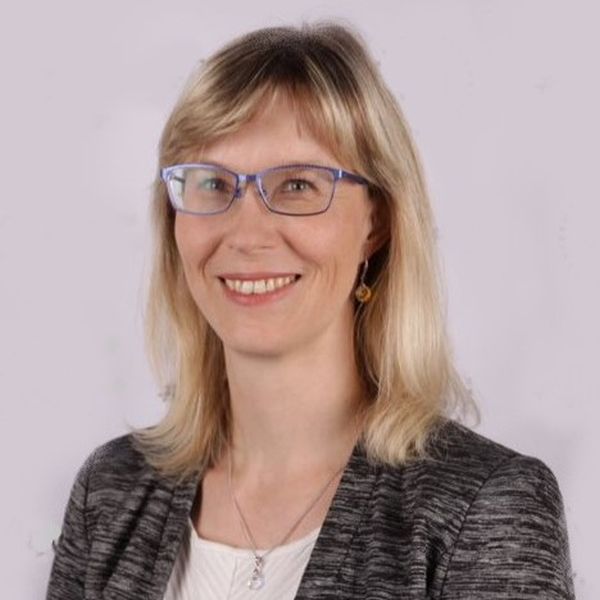 Zuzana Kvítková (PhD) is an assistant professor at the Department of Management at the Prague University of Economics and Business (CZ). Her main focus is marketing and management with application on Tourism – hospitality, travel agencies and destinations. The second direction of interest is ethics, sustainability, CSR and ethics in management. She has also been a manager of the Erasmus+ (in the topic of reputation management) and Visegrad projects (in the field of sustainability). Currently, she is part of the team working on the project „Responsibility and Ethics in Management Education for Future Challenges“. She has also been invited as a guest speaker to several universities in Europe.
Course taught within EMO:
Business Ethics
 Patrik is an experienced lecturer, consultant, and researcher focusing on Financial and Socio-Economic Valuation and Strategic Decision-making Support. He works for the Department of Strategy as a Senior Lecture. He is passionate about rational decision-making and analyzing the social impacts of business and policies and publishes his work in Social Cost-Benefit Analysis.
He has worked in the field for more than 20 years. He spent a couple of months at the Department of Land Economy, University of Cambridge (UK) as a Visiting Scholar (in 2006 and 2007), and he taught courses focused on socio-economic evaluation as a Visiting Teacher at the University of Krasnoyarsk (2008, RF). As a Consultant, he has worked for dozens of public and private bodies, mainly in evaluating and evaluating projects and policies.
Course taught within EMO:
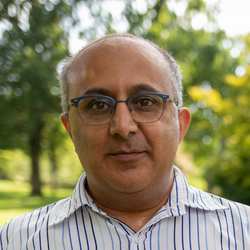 Tanweer Ali is a lecturer with the BBA and CEMS programmes at VŠE. He teaches classes in finance and sustainability. His current research interest is in Corporate Governance; he has participated in numerous conferences and published several journal articles and book chapters.
He holds an MA degree in Mathematics from the University of Oxford and the CFA (Chartered Financial Analyst) and FRM (Financial Risk Manager) designations. Before entering academia, Tanweer had a ten-year career in finance, both in the United Kingdom and the Czech Republic. In addition to his teaching work, he has been an active volunteer with the CFA Institute in Virginia, serving in numerous roles for over 20 years. He also established the Czech CFA Society and was its first President. Tanweer has also acted as a board member or advisor for a number of non-profit organizations, especially in the refugee and human rights fields. He currently serves on the board of the Institute for Debt Prevention and Resolution.
Active memberships: Worldwide Interdisciplinary Network for Institutional Research (WINIR), CFA Institute, Global Associate of Risk Professionals, Royal Society for Arts, Manufactures and Commerce (RSA).
Course taught within EMO:
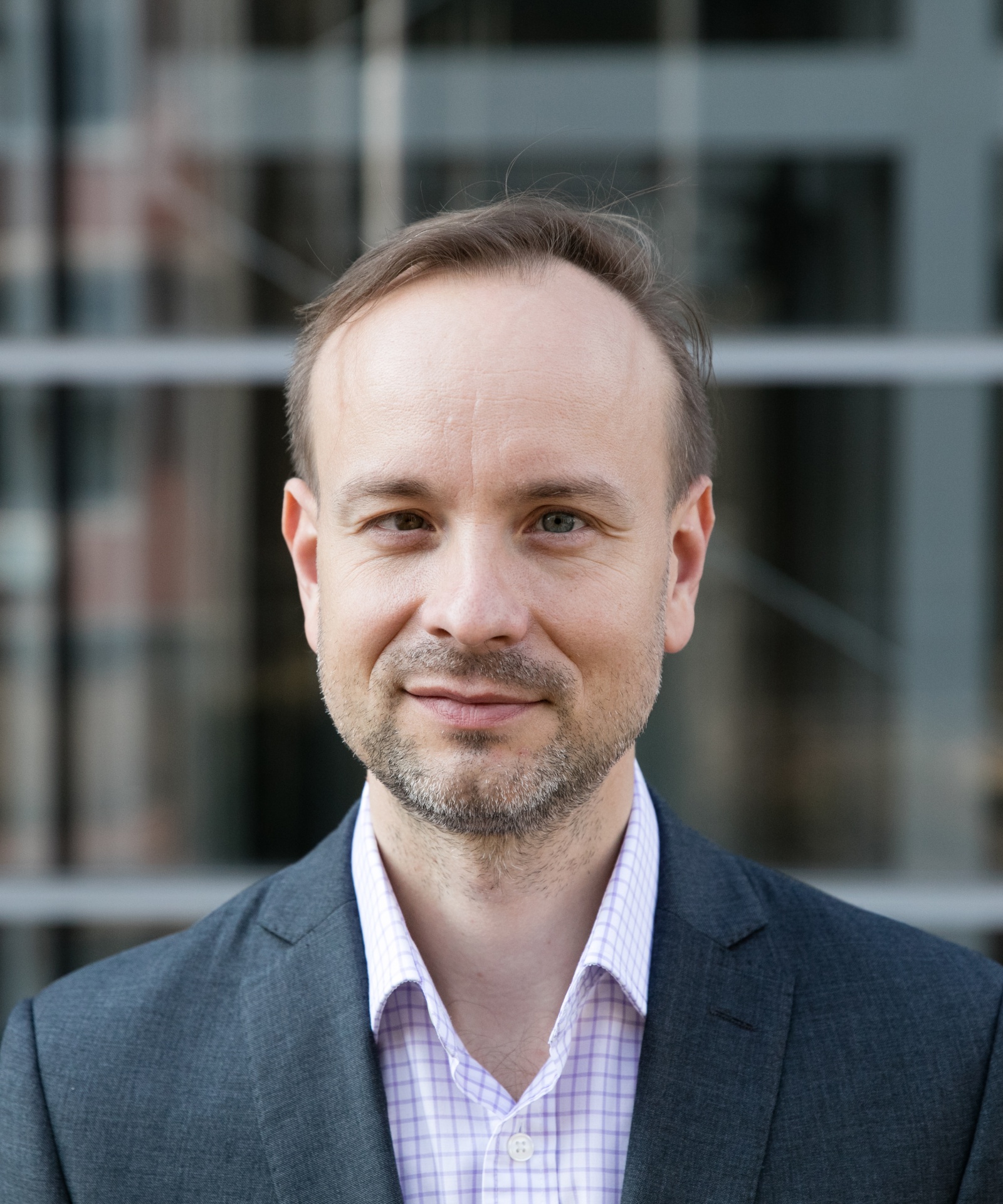 Ladislav is an experienced lecturer, business consultant, and practitioner. He focuses on strategy and strategy-related topics. Besides being the Academic Director of the BBA programme, he is also the Academic Director of the university’s flagship programme CEMS – Master in International Management, and Deputy Head of the Department of Strategy. He is passionate about designing strategies and navigating companies in the wild water of future megatrends and uncertainties.
He has worked in the field for more than 11 years. He is also a recipient of the inaugural CEMS Philippe Louvet Innovation Award along with a grant of 20,000 Euros which enables the VSE to implement a new capstone course entitled “Lateral Collaboration in the Age of Exponential Change and Disruption.” Together with his colleague from the Department of Strategy, he has co-written two case studies published by Ivey Publishing; “Debito Technologies: Taking a debt management app abroad“ and “Behavio Labs: Scaling Survey Software into a Global Product”.
Course taught within EMO:
 Karolina Kania is a multilingual Design Anthropologist and UX Researcher. She works as an Assistant Professor and Research Fellow at the Faculty of Business Administration, Prague University of Economics and Business. Her research focuses on the socio-political dimensions of tourism development in New Caledonia (French overseas territory in the South Pacific), with particular attention to Indigenous land governance, colonial legacies, and conflicts over resources. Karolina is also a member of the Horizon Europe–funded REMAKING project team. Over the past five years, she has worked at the intersection of academia, business, and civil society, developing practice-based research projects that connect students with NGOs, startups, and public institutions.
Course taught within EMO:
Design Anthropology in Business Practice
Alena is a Postdoctoral Researcher in Data Science at the Department of Economics, Faculty of Law, Charles University. She holds a Ph.D. in Economics and Econometrics from CERGE-EI and teaches courses in statistics and econometrics. Her research interests lie at the intersection of econometric theory and applied machine learning. Among other things, she works on applications of machine learning — particularly natural language processing — to healthcare problems.
Course taught within EMO:
Statistics and Econometrics
Marek Kapička has been serving as the Director of CERGE, Charles University, and the Economics Institute of the Czech Academy of Sciences (EI) since January 2024. He is also a member of the Executive and Supervisory Committee of CERGE-EI. Previously he served as Deputy Director for Research at CERGE-EI from 2013 to 2015. He has been an Associate Professor with Tenure (under US permanent charter) at CERGE-EI since 2013. He is a Docent (Associate Professor) at CERGE, Charles University and a Senior Researcher at the Economics Institute of the Czech Academy of Sciences. He was also an Associate Professor at U.C. Santa Barbara. He received his M.A. in Economics from Charles University and Ph.D. from the University of Chicago. He won the Young Economist Award from the European Economic Association in 2003, and the J. E. Purkyně Fellowship from the Czech Academy of Sciences in 2013-2017. He has published in journals such as Review of Economic Studies, Journal of Monetary Economics, Review of Economic Dynamics, or American Economic Journal: Macroeconomics.
Research Orientation:
Macroeconomics, public finance, economic theory, contract theory
Course taught within EMO:
Macroeconomics
Filip Matějka has been an Associate Professor with Tenure (under US permanent charter) at CERGE-EI and a member of the Executive and Supervisory Committee of CERGE-EI since 2016. He is a Professor at CERGE, Charles University a Senior Researcher at the Economics Institute of the Czech Academy of Sciences. Filip has been Research Fellow at the Centre for Economic and Policy Research, London, a member of the Editorial Board of the Review of Economic Studies and American Economic Review. He received his M.S. and Ph.D. degrees in applied mathematics from Princeton University. He graduated from Charles University in Physics. He is awarded by prestigious ERC Consolidator Grant “Economics of Inattention” (2021-2026). Filip received the Award of the Minister of Education of the Czech Republic, American Economic Review Excellence in Refereeing Award, Exeter Prize for the best paper in experimental economics, and The Neuron Award for promising young scientists. He was a Visiting researcher at UC Berkeley, USA. Filip’s research work has been published in several leading economics journals, including Econometrica, the Journal of Economic Theory, Review of Economic Studies, and others.
Research Orientation:
Macroeconomics, information economics (mostly rational inattention) and behavioral economics
Course taught within EMO:
Macroeconomics
Principles of Economics I
 Alaitz Ayarza is an Assistant Professor of Economics at CERGE-EI. She holds a PhD in Economics from the European University Institute in Florence. She is an applied microeconomist specializing in labor economics, with research interests in migration and gender economics. Her work examines how economic opportunities, institutions, and social factors shape individual decisions and labor market outcomes. Her teaching draws on this research background and focuses on econometrics, causal inference, and labor economics.
Course taught within EMO:
Statistics and Econometrics II
Tereza Burýšková is a PhD candidate in Economics at CERGE-EI and holds an interdisciplinary background in law, mathematics, and physics from Charles University. Her research focuses on the economics of attention across diverse contexts, including how readers select news sources, how online retail platforms allocate user attention in exchange for usage fees, and why it may sometimes be optimal not to plan. Beyond her research, she is actively engaged in communicating economic ideas to both academic and general audiences.
Course taught within EMO:
Principles of Economics I